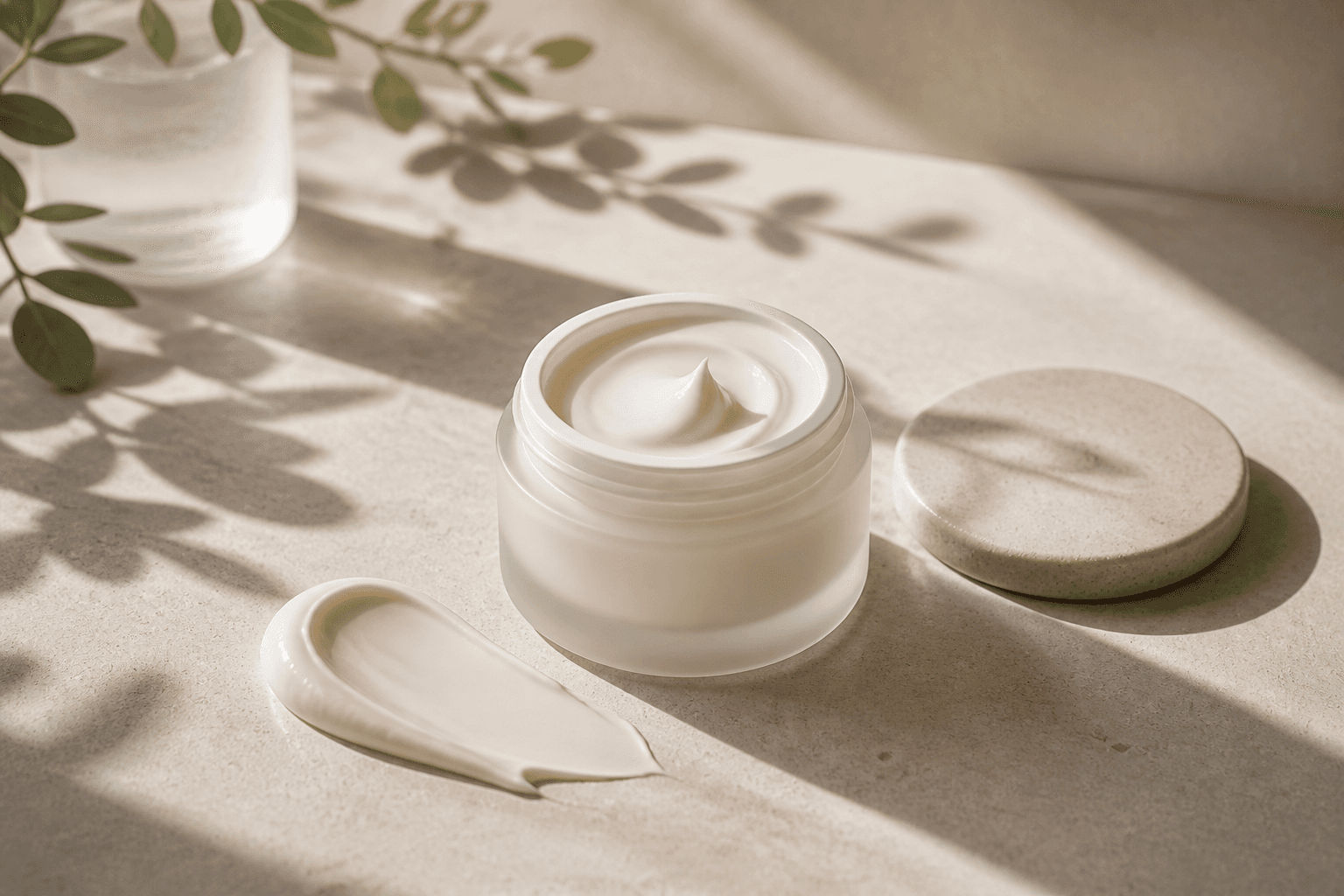
Ceramides are barrier support, not a reset button
Ceramides show up in Korean skincare because they fit the comfort-first side of the category. They can be useful when a routine feels drying, tight, or too active-heavy, but they do not erase the effect of harsh cleansing, daily exfoliation, or a sunscreen habit that keeps failing.
They help most when the routine is already quieter
The best time to test a ceramide product is when the obvious stressors are removed first. If the routine is still crowded with acids, retinoids, peels, and new serums, it becomes hard to tell whether ceramides are helping or whether the skin is still reacting to too much activity.
Look for the supporting lipid and texture story
Ceramides are part of the skin barrier conversation, but they are not the only lipid in it. Many better barrier-support moisturizers also think about cholesterol, fatty acids, humectants, and occlusive comfort. In a commercial brief, that becomes a formula-route question: stock formula screening or custom formula work, cream or gel-cream texture, sensitive-skin positioning, fragrance boundary, package compatibility, and whether the ingredient story can be sampled without relying on one famous callout.
The moisturizer step is usually the cleanest supplier question
Ceramide language is most useful when it improves the moisturizer layer: a cream, gel-cream, or balm that leaves the skin settled without feeling greasy or waxy. A separate ceramide serum is not automatically better. For OEM, ODM, manufacturer, or private-label review, this means the first inquiry should often ask for moisturizer texture, jar or tube fit, sample acceptance criteria, and MOQ realism before expanding into multiple ceramide SKUs.
Pair them with restraint, not product stacking
Ceramides work best inside a boring routine: gentle cleanse, comfortable moisturizer, and daytime sunscreen. If the skin feels overworked, use them as part of a barrier-support reset rather than as permission to keep every active in rotation. The same rule protects the OEM/ODM inquiry brief: do not combine barrier repair, anti-aging, brightening, exfoliation, and acne language in one early request. Keep the sample narrow enough for the Korean manufacturer to answer.
Test one texture before judging the supplier path
A ceramide cream that feels rich and cushiony can be useful in winter or after a drying routine, while a lighter gel-cream may suit a market that dislikes a waxy finish. For buyer brands, that texture choice drives the supplier path: stock sample, custom formula, package review, budget, MOQ 1000+ feasibility, and launch-channel fit. If every variable changes at once, the partner is judging the whole launch idea, not the ceramide SKU.
Know what ceramides cannot answer alone
If dryness comes from weather, over-cleansing, or a moisturizer that is too light, ceramides may help the routine feel more complete. If irritation is painful, spreading, swollen, broken, or not improving, stop experimenting and treat that as a clinician or dermatologist question, not another ingredient comparison. A good K-beauty routine still needs a safety boundary.