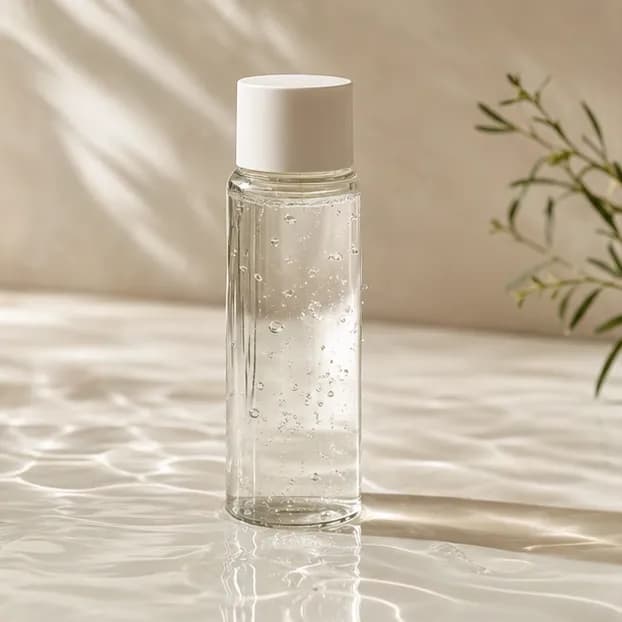
Quick answer: Korean toner usually hydrates rather than second-cleanses
Many K-beauty toners are designed as the first light leave-on layer after cleansing. Older Western toner expectations often centered on removing residue or oil with an astringent feel. That is not a hard country rule: modern Western toners can hydrate, and Korean toners can exfoliate. Compare the product job and formula, not only the label.
For brands and buyers
Planning a Korean toner? Turn the texture decision into a sample or formulation inquiry.Send your company, buyer market or country, first toner SKU, and one unresolved sample, formula, package, MOQ, supplier, or manufacturer decision. Unknown details can stay unknown when you name the blocker.Korean toner vs Western toner: compare the job, not the country
Start with the job you need. A hydrating toner adds a light comfort layer, an exfoliating toner targets surface buildup, and an astringent toner reduces the oily feel some users want after cleansing. Products from either market can do any of these jobs, but K-beauty shelves make watery, milky, essence-like, and cushiony hydration especially visible.
Watery, milky, and essence-like toners solve different friction
Watery toner suits a routine that already has several layers or needs something fast beneath daytime products. Milky toner adds more cushion when cleansing leaves skin uncomfortable. Essence-like toner sits between those experiences, giving more slip without necessarily replacing serum or moisturizer. The best texture is the one that removes friction from the routine you already use.
Place it after cleansing, before heavier decisions
Most beginners can read toner as the first leave-on layer after cleansing. You can pat it on with hands when the goal is low-friction hydration, or use a cotton pad only when the product and skin tolerate that contact. Damp skin can make a watery layer feel smoother, but toner should not become a harsh second cleanse.
Hydration can make the next step easier
The useful toner question is often not whether you need another product. It is whether one light layer makes the next step easier to use. If moisturizer always feels like it sits on top of dry skin, a hydrating toner can create a better bridge. If serum feels sticky or sunscreen pills, toner may not be the fix; the next layer may simply be too much.
Layering should have a reason
K-beauty content can make multiple toner layers look like the point, but layering is only useful when each layer improves routine fit. One thin layer may be enough before serum. A second layer may help in dry weather. Five layers are rarely the beginner move. The next step should feel easier, not buried under extra decisions.
Do not ask toner to replace the core routine
Toner can soften the transition between cleansing and treatment, but it does not replace moisturizer, sunscreen, or a targeted active when those are the steps the routine actually needs. If the routine feels tight, look at cleanser and moisturizer first. If the routine feels heavy, toner is not the excuse to keep adding layers.
Choose toner by routine fit
Pick a toner by the friction in your actual routine. If the concern is tightness after cleansing, look for gentle hydration. If the concern is a heavy routine, choose a fast watery texture. If the concern is dull comfort, a slightly milky toner may make sense. Do not expect toner to replace moisturizer, sunscreen, or a targeted active; it should make the routine easier to repeat.