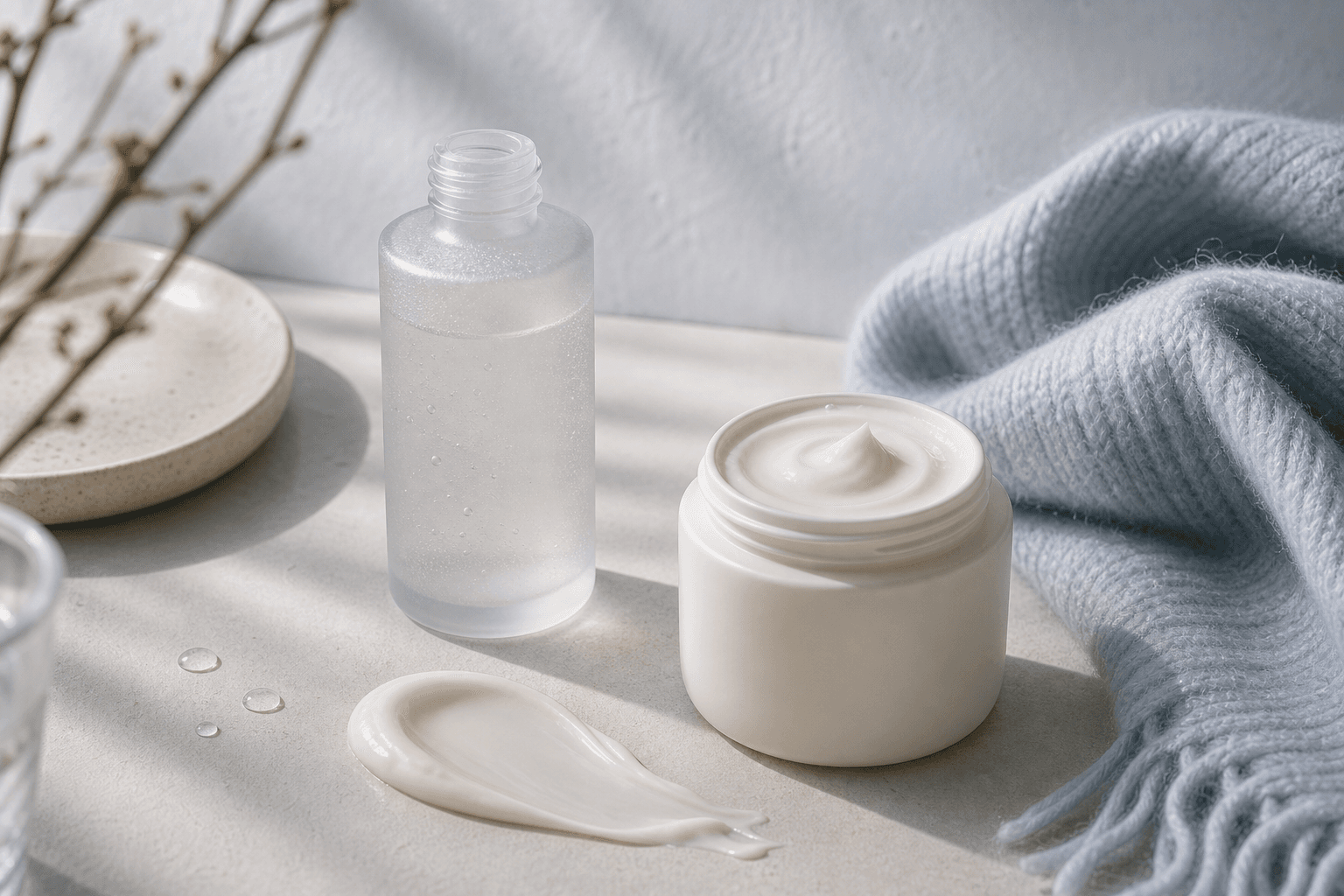
Winter dryness is a routine pressure test
Cold air, indoor heating, and lower humidity can make a routine that worked in warmer weather feel too light. The answer is not always more steps. Start by asking where the routine is leaking comfort: cleansing, hydration, moisturizer weight, sunscreen finish, or too many active products at once.
Make cleansing less ambitious
Dry winter skin often benefits from less aggressive cleansing. Use an oil cleanser only when there is sunscreen, makeup, or real buildup to remove, and keep the second cleanse gentle enough that the skin does not feel tight afterward. A clean face should not feel like a reset button that erases every bit of comfort.
Use hydration as a bridge, not a pile-up
A watery toner, essence, or light serum can help dry skin feel more flexible before moisturizer, but three hydrating layers are not automatically better than one good layer used consistently. Choose the format that makes the moisturizer sit better instead of chasing a long routine diagram. Commercially, the bridge layer should answer a specific question: watery toner for quick relief, essence for cushion and slip, or serum for a clearer ingredient direction. That choice changes sample quantity, bottle or pump fit, viscosity target, fill volume, and whether the supplier should screen ready formulas or build around a custom texture brief.
Let moisturizer do more of the winter work
Winter is often the season to move from a thin gel to a cream, gel-cream, or more cushioning moisturizer. Ceramides, panthenol, squalane, and similar support ingredients can be useful here, but the bigger question is whether the moisturizer leaves the skin settled for several hours without feeling waxy, greasy, or suffocating. A useful Korean OEM/ODM brief names the desired finish before the ingredient wish list: cushion cream, fast-set gel-cream, night cream, barrier cream, fragrance-free sensitive format, jar, tube, airless pump, or travel-friendly package. That turns dry-skin interest into reviewable sample criteria instead of a vague rich cream request.
Keep sunscreen wearable in cold weather
Sunscreen still belongs in the daytime routine, even when the weather makes the skin feel dry instead of oily. If a matte sunscreen starts feeling tight, test a more natural or dewy finish over a better moisturizer. The goal is not the richest possible routine; it is a winter routine that still works every morning. For a buyer inquiry, sunscreen fit should be separated from moisturizer development unless the first SKU is clearly a sunscreen. Otherwise the brief gets crowded: one partner is asked to solve hydration, cream finish, UV positioning, package testing, and claim ownership in the same message.
Define the first dry-skin SKU before supplier outreach
Dry-skin demand can point to several different commercial jobs: hydrating toner, milky essence, gel-cream moisturizer, richer winter cream, sleeping mask, cleanser, or sunscreen that does not feel tight. Those jobs should not be sent to Korean partners as one broad supplier request. The inquiry becomes stronger when it names one first SKU, one target market or channel, one benchmark texture, one sample proof job, one package assumption, and one MOQ or budget signal. If the buyer is unsure whether MOQ 1000+ is realistic, that uncertainty belongs in the note because it changes which manufacturer, ODM, private-label supplier, or packaging route should be reviewed first.
Turn winter routine research into a qualified inquiry
A qualified dry-skin inquiry does not need a perfect launch plan. It needs useful context before outreach: company type, buyer country or channel, first SKU/category, stock formula versus custom formulation preference, package state, sample purpose, fragrance or sensitive-skin boundary, and the stuck decision. Unknown formula, sample, packaging, MOQ, budget, supplier type, fabricante, fornecedor, fournisseur, or local sourcing phrase can stay unknown when the message explains why it blocks the next step. That is better than asking for Korean skincare manufacturers with no texture, package, or sample acceptance rule.
Keep claim boundaries plain
Dry skin language should stay practical. A cream can be positioned around comfort, cushion, less tightness, routine support, or winter use, but it should not promise to treat eczema, repair a medical condition, or guarantee a clinical result unless qualified claim owners review the market, formula, and evidence. For lead quality, this boundary matters: the best inquiry asks whether a Korean partner can review texture, package fit, sample proof, and cautious positioning, not whether they can make a miracle dry-skin treatment.