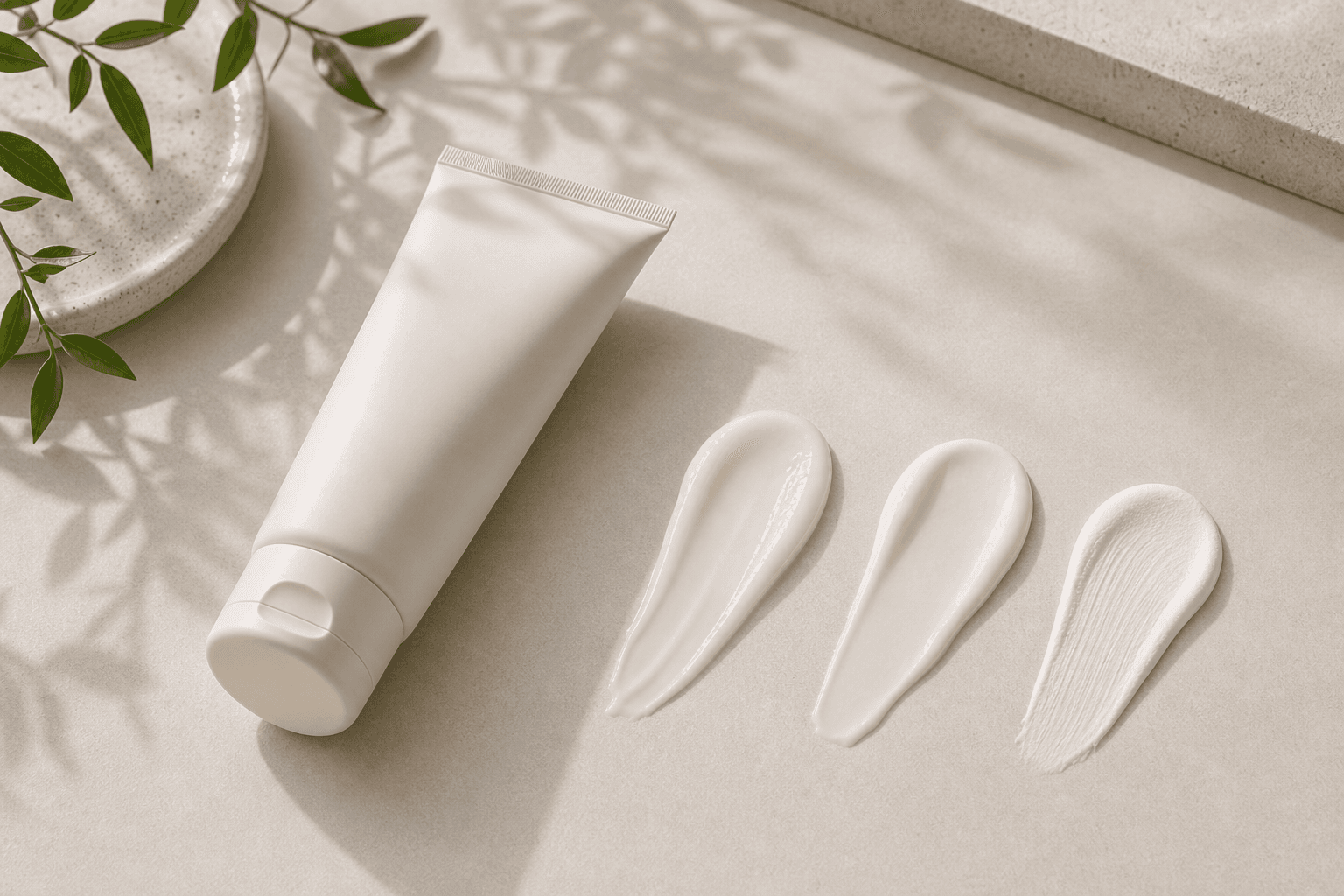
Finish is a compliance decision
Sunscreen only works as a habit if you can stand wearing it. A beautiful ingredient list does not help much when the finish feels greasy, chalky, tight, or disruptive under the rest of the routine. Start by asking which texture you will apply generously and reapply without bargaining with yourself.
Dewy finishes suit comfort and glow
A dewy Korean sunscreen can be useful when skin feels dry, makeup looks flat, or the morning routine needs a more cushioned ending. The tradeoff is shine. If your face already gets oily quickly, a dewy finish may look good for the first hour and then make the routine feel unstable.
Natural finishes are the safest first test
A natural finish is usually the best starting point because it does not push the routine hard in either direction. It should feel comfortable, sit cleanly over moisturizer, and avoid looking dramatically shiny or powdery. For an OEM/ODM inquiry, natural finish is also the easiest benchmark to explain: name whether the sample should disappear, leave a soft skincare glow, avoid white cast on the target skin tones, or stay stable under makeup. That gives a Korean manufacturer a reviewable finish target instead of a vague request for a "daily sunscreen."
Velvet finishes are useful, but not always forgiving
A velvet finish can help when the target buyer dislikes shine, lives in humid weather, or wants sunscreen to sit more cleanly under makeup. The risk is that some velvet formulas can feel dry, grabby, or more likely to pill when the skincare underneath is too heavy. If barrier comfort is part of the positioning, an extremely matte sample may not be the right first test. In a Korean sunscreen brief, velvet should be paired with the climate, channel, target skin feel, package format, and sample feedback rule so the partner can judge whether the finish is realistic at the MOQ and formula route under review.
Match finish to market and channel
The same sunscreen finish can read differently by market, season, and sales channel. A dewy finish may feel premium in a dry climate but too shiny for a humid commuter routine. A velvet finish may help a makeup-led channel but disappoint a buyer who wants cushion and comfort. A natural finish can be the safest first SKU when the brand still needs broad repeat use. Before asking for quotes, write the target market or buyer region, expected channel, climate assumption, benchmark product feel, and reapplication moment into the inquiry. Those details tell the Korean ODM partner what tradeoffs to screen before sample work starts.
Test sunscreen like daily clothing
A finish guide cannot replace label directions, adequate application, SPF and PA standards, or professional claims review. The practical test is daily life: how it feels at the amount people actually need, how it behaves after moisturizer, whether it stings around the eyes, how it reapplies, and whether the target buyer would still use it tomorrow. If the test is for a first SKU, record the failed moment plainly: too shiny, too dry, white cast, pilling, eye sting, packaging mismatch, sample timing, MOQ uncertainty, or unclear formula route.
Turn the finish decision into an inquiry
A sunscreen finish becomes a better Korean basic skincare OEM/ODM inquiry when the buyer names the first SKU, target market, finish target, benchmark texture, sample purpose, package assumption, MOQ or budget signal, and the stuck decision. Unknown answers are acceptable when the blocker is visible. The weak request is "send sunscreen suppliers." The stronger request is "we need Korean sunscreen review for a natural-to-velvet finish, tube packaging, first market, sample proof, MOQ 1000+ feasibility, and whether stock formula screening or custom ODM formulation is the responsible route."