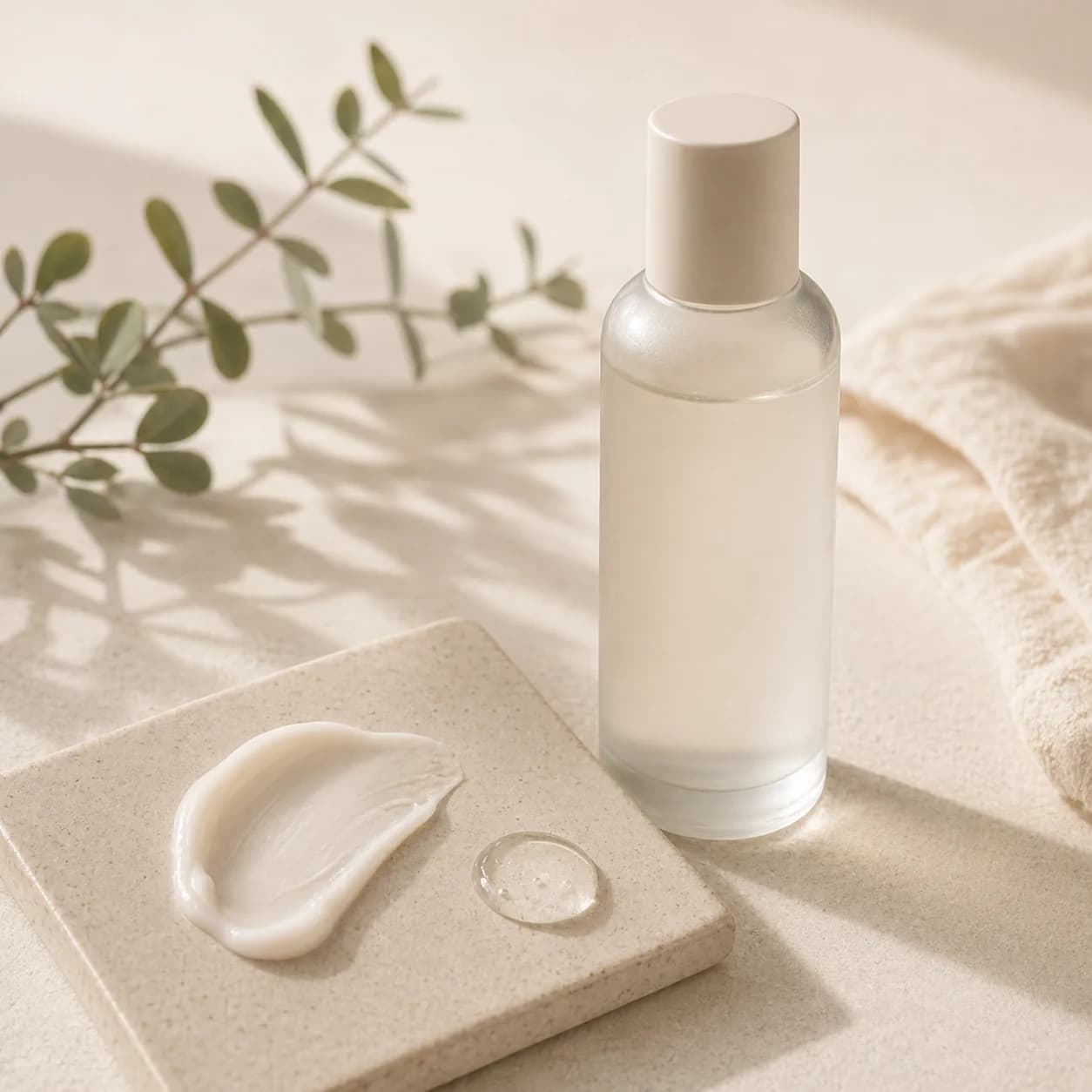
Niacinamide is useful because it is flexible
Niacinamide fits the K-beauty preference for multi-purpose support. It can sit comfortably in routines focused on balance, brightness, visible texture, and barrier comfort without always feeling aggressive.
Start with one step, not a stack
When toner, serum, moisturizer, and sunscreen all advertise niacinamide, the better question is which one product already covers the job you want done. If the routine needs a clearer active direction, a serum may be the cleanest place. If the routine mainly needs comfort, a moisturizer with niacinamide can be enough. One step keeps the routine readable and prevents ingredient repetition from pretending to be progress.
When ingredient interest becomes a formulation inquiry
For a first SKU, niacinamide should turn into a partner question only after the product role is visible. Name whether the idea is toner, serum, cream, sunscreen, or another basic skincare category; the target market or first channel; the desired claim boundary; and the stuck decision. Unknown percentage, formula route, sample purpose, package fit, MOQ, supplier, or budget details can be named as unknown instead of delaying the inquiry. Manufacturer path can stay unknown too when the note explains why partner review is blocked. If company context, market/channel or buyer country/region, first SKU/category, help needed, and the stuck formula, private-label, sample, package, MOQ, or claim-owner decision are visible, send the inquiry for review instead of polishing an ingredient wish list. The stronger lead does not ask for "a niacinamide product"; it says whether the blocker is stock formula screening, custom ODM formulation, sample proof, package fit, MOQ 1000+ feasibility, claim-owner caution, or private-label responsibility.
Separate percentage, texture, and claim owner before outreach
A niacinamide inquiry gets messy when the buyer asks for a percentage, a silky texture, a sensitive-skin claim, and a low MOQ as if they are one question. They are separate review inputs. Percentage belongs with formula route and irritation tolerance. Texture belongs with sample proof and package fit. Claim language belongs with the brand owner, market, and regulatory review boundary. MOQ belongs with SKU count, package minimums, first channel, and budget. Splitting those inputs helps a Korean skincare ODM, manufacturer, or private-label partner answer the next responsible question instead of guessing whether the buyer needs stock formula screening, custom formulation, sample iteration, packaging review, or quote feasibility.
Do not let percentage become the plan
A higher percentage or louder concentration is not automatically the better beginner choice. Strength only matters after the product has a clear job, a texture people will use, and a schedule that fits the target market. If a moderate formula fits the routine and a stronger one creates tightness or flushing, the moderate one is doing the better work. For a Korean formulation inquiry, ask what the percentage must prove, what claim owner will approve, and what sample feedback would make the buyer move forward. The lead should not say only "high niacinamide"; it should say whether the blocker is percentage choice, sensitive-feel tolerance, formula route, benchmark texture, sample type, package fit, MOQ, budget, or buyer-channel readiness.
Make how much niacinamide a sample-proof question
The buyer does not need a perfect percentage before the first Korean partner conversation. They need a reviewable reason for the percentage range: brightness support, oil-balance feel, barrier comfort, visible texture support, or a low-irritation routine role. A 2-5% style question, a higher-strength serum question, and a moisturizer-support question create different sample, claim, texture, package, and MOQ reviews. Put the desired role, target market, tolerance boundary, and unknown percentage in the inquiry so the Korean ODM, manufacturer, or private-label supplier can answer the route instead of guessing from a number. If the sample must prove non-sticky finish, low irritation, bright-looking tone support, or package compatibility, name that proof job before asking for manufacturer names.
Use named unknowns as lead-quality signals
Unknown niacinamide percentage, stock-versus-custom formula route, sample purpose, package format, MOQ, supplier type, manufacturer path, budget, fabricante, fornecedor, fournisseur, or local sourcing phrase can stay unknown when the note explains why it blocks outreach. The useful inquiry is not perfect. It is reviewable: company context, target market/channel or buyer country/region, first niacinamide SKU/category, one Known / Unknown / Stuck decision, and a clear ask for formulation, private label, sample, packaging, MOQ, or supplier review. Use the source-note format: Known: first SKU and buyer country/channel. Unknown: percentage, sample, package, MOQ, supplier, or formula route. Stuck: quote, sample, formulation, private-label path, or claim-owner decision.
Use frequency before chasing strength
Beginners do not need to make niacinamide dramatic. Start slowly, especially if the rest of the routine already includes exfoliating acids, retinoids, vitamin C, or several brightening products. A few steady uses per week tells you more than adding a strong product every night and then guessing which step caused tightness, stinging, flushing, or breakouts.
Pair it with a quieter routine
Niacinamide pairs best with a routine that still has basic comfort: gentle cleansing, hydration, moisturizer, and daytime sunscreen. It can sit beside centella, ceramides, panthenol, and other support ingredients without creating a noisy active stack. If you pair it with stronger actives, keep the schedule simple enough that your skin response remains easy to read.
Read the routine result, not the ingredient count
The useful question is whether the routine is easier to repeat and less reactive after the niacinamide step is added. If brightness looks slightly steadier, oil feels more balanced, or barrier comfort improves without new irritation, keep the lane simple. If nothing changes, adding another niacinamide product usually makes the routine harder to interpret, not more intelligent.
Know when the label is not the answer
If a product already works and happens to include niacinamide, that is fine. If you are buying another product only because the label repeats the ingredient, slow down. Niacinamide can support tone, texture, and comfort, but it should not become a reason to ignore irritation, skip sunscreen, or keep layering products when the routine needs fewer decisions. For a buyer-brand idea, the label is not the lead; the lead is the reviewable context: company, market, first SKU/category, sample purpose, package state, formula route, MOQ signal, and one stuck formulation or private-label decision.