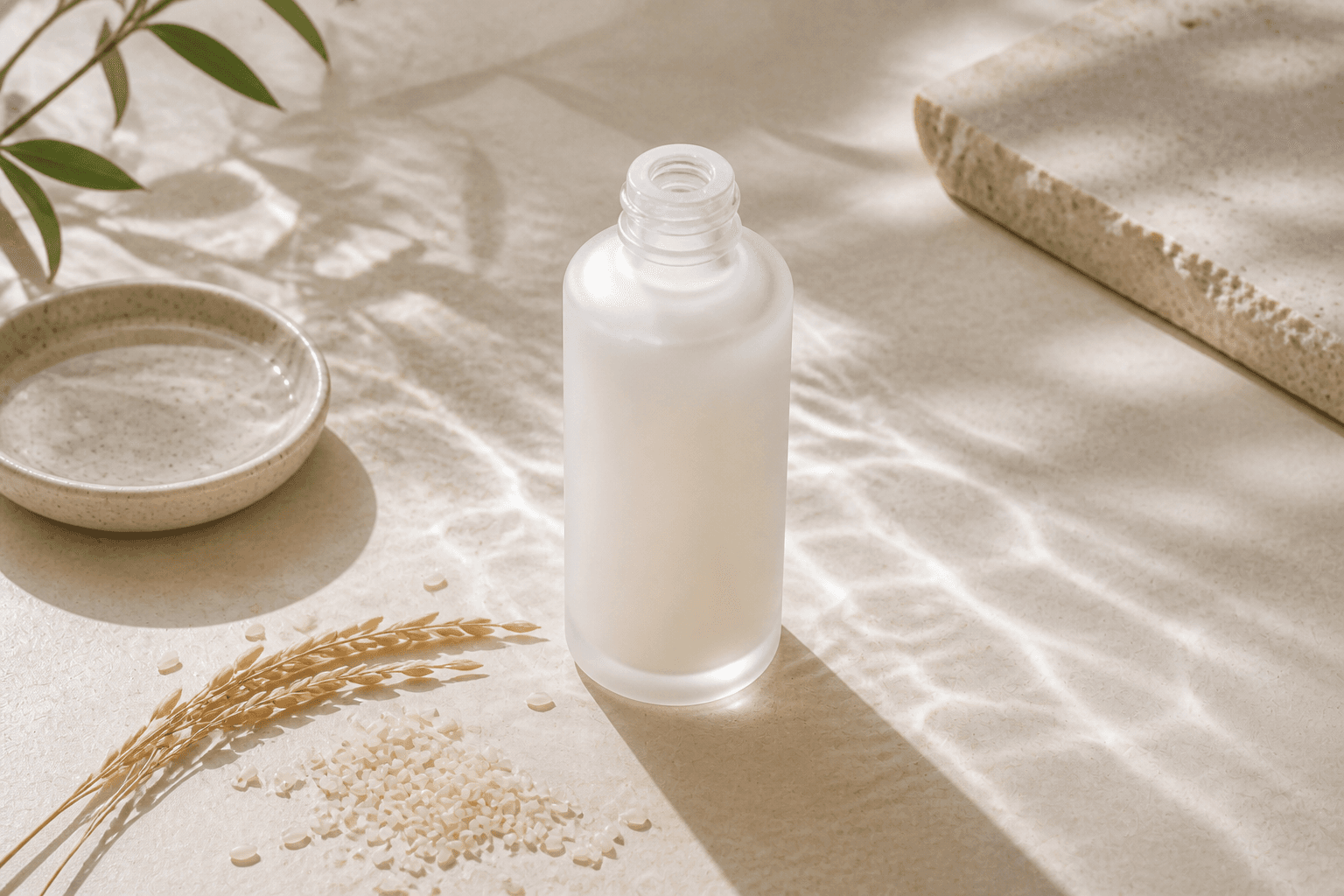
Rice extract belongs in the support lane
In K-beauty, rice extract usually works best as a soft support ingredient. It can make a product feel more nourishing, comfortable, or glow-oriented, especially in watery layers and creams. It should not be treated like a dramatic active that can fix an unstable routine by itself.
Glow is usually a sample-proof question
When a rice product makes skin look better, the reason is often simple: hydration, smoother feel, and a finish that reflects light more evenly. That kind of glow is useful, but it is different from claiming that one ingredient can erase uneven tone, replace sunscreen, or undo irritation from too many actives.
Choose the format by the commercial gap
A rice toner or essence makes sense when the routine needs a light comfort layer. A rice cream makes more sense when the moisturizer step feels too thin. A mask can be a temporary softness ritual. The format matters because the same ingredient label can do very different jobs depending on where it sits. Commercially, that format decides stock formula screening, custom formula development, bottle or jar fit, sample quantity, MOQ realism, and which Korean supplier type should review the request. A vague "rice skincare supplier" search becomes more useful when it says whether the buyer needs private-label screening, custom ODM formulation, package compatibility, sample iteration, or a manufacturer path for one first SKU.
Do not stack every glow ingredient at once
Rice extract, niacinamide, exfoliating acids, vitamin C, and brightening language can all show up in the same shopping session. That does not mean they should all enter the routine together. Buyer brands should avoid the same pile-up in the brief. Pick the first SKU, target market/channel, formula route, sample proof job, and stuck decision before asking Korean manufacturers for names, quotes, or MOQ guesses.
Separate soft glow from claim ownership
Rice extract can support a soft-glow story, but the claim owner still has to decide what the product is allowed to say. Hydrating, nourishing, softening, tone-support, brightening, and sensitive-skin language do not carry the same review burden. Before quote outreach, name who will approve claims, which market or channel the claim must survive, and what wording should stay cautious. That protects lead quality because the Korean partner can review the sample job and claim boundary together instead of guessing whether the buyer expects a cosmetic comfort story or a stronger brightening promise.
Turn rice interest into an inquiry
A rice-extract lead is stronger when it names company context, buyer country or target market, first SKU/category, texture target, sample purpose, formula route, package assumption, MOQ or budget signal, and the stuck decision. Unknown answers are acceptable when the blocker is visible. The weak request is "send rice skincare manufacturers." The stronger request is "we need Korean rice toner or cream review for soft-glow positioning, first market, sample proof, package fit, MOQ 1000+ feasibility, claim caution, and whether stock formula screening or custom ODM formulation is the responsible route."
Know when rice is not the answer
Rice extract cannot compensate for sunscreen that fails the channel, a cleanser that leaves the skin tight, or a moisturizer concept that never feels comfortable. If the launch already has those problems, fix the basic step first. The ingredient is more useful as finishing support once the first SKU has a real role. That makes the inquiry easier to qualify and easier for a Korean OEM, ODM, private-label supplier, or manufacturer to answer.